
Apps That Help Collectors See More Than Coins
Data often reveals what the eye misses.
Modern numismatics relies on computer vision algorithms and massive databases.
Traditional visual inspection methods give way to automated image processing systems.
The technological stack of applications includes neural networks trained on millions of coin images of varying preservation levels.
The best coin collecting apps identification process takes from two to five seconds.
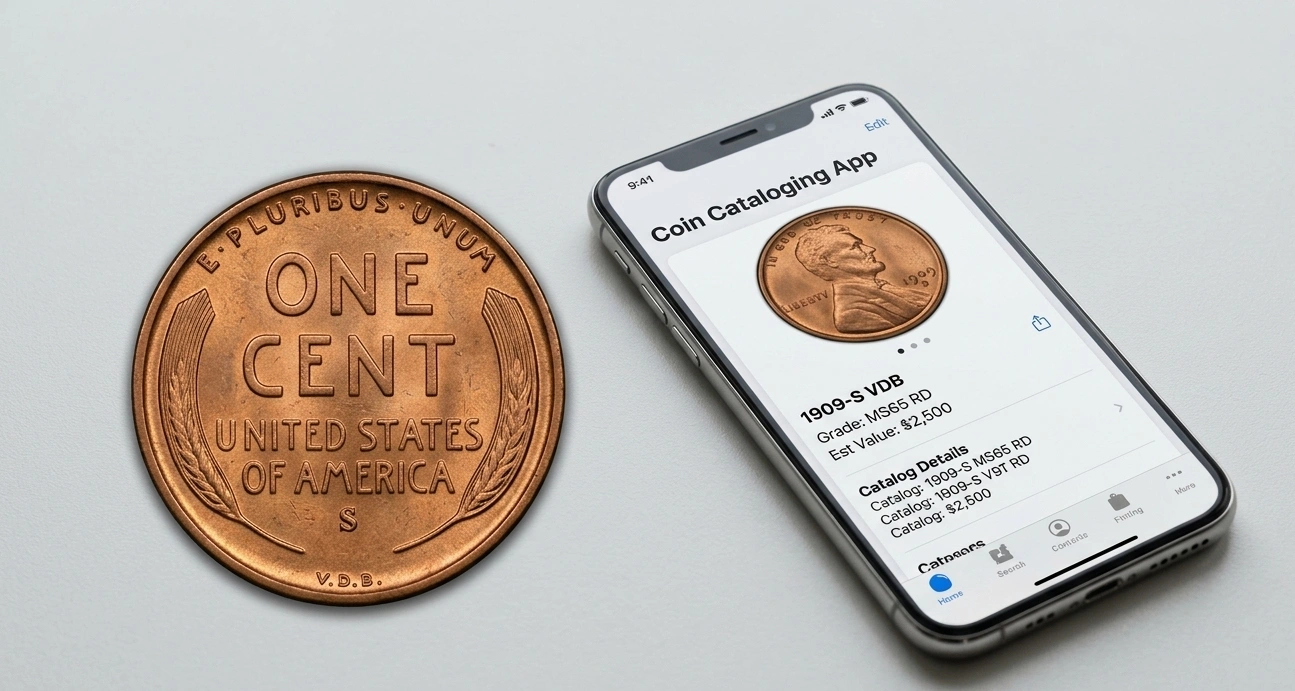
Algorithms compare edge geometry, legend placement, and specific minting defects with reference samples.
Using specialized software minimizes the risk of purchasing mass-produced counterfeits.
Digital tools provide access to auction trade history in real-time.
Coin ID Scanner
Focusing on deep cataloging, this app serves professional collectors.
The database contains information on coins from over 200 countries.
The application forms a digital passport for the collection.
Integration with market indices allows tracking asset value dynamics.
Coinoscope
Utilizing visual similarity search technology, it provides rapid results.
The app works effectively with coins having significant wear.
The tool provides direct links to lots on major trading platforms.
Comparison Parameter | Coin ID Scanner | Coinoscope |
Recognition Method | Neural Network Classification | Visual Vector Comparison |
Offline Mode | Connection Required | Connection Required |
Accuracy (UNC state) | 98.5% | 96.2% |
Price Archive Depth | 12 years | 7 years |
Subscription Cost | from $5.99 | Free with Ads |
Impact of Data on Investment Asset Valuation
Digitalization of data changed the pricing structure.
Transparency of sales statistics limits opportunities for manipulation in local markets.
Objective indicators → Increased buyer trust → Higher liquidity of rare specimens.
The free coin scanner app accumulate information on grading according to the Sheldon scale.
This allows matching the price of a specific specimen with its physical condition.
Below is the statistics for one of the most volatile positions — the Gold Saint-Gaudens Double Eagle.
Price Statistics for the $20 Gold Double Eagle (1933)
Year 2002: price $7,590,000
Year 2021: price $18,872,250
Year 2026 (Estimate): price $21,500,000
Average Annual Growth Rate: approximately 5.1%
Growth Reason: status of the only legally owned specimen
Recognition Technology Workflow
Program code analyzes the image in stages.
Photo upload → Object contour extraction → Perspective distortion compensation → Key feature extraction → Match searching.
Algorithms account for patina characteristics affecting metal reflectivity.
Decentralized databases constantly updated by users improve accuracy.
This creates a self-learning system effect.
Using smartphone macro photography allows detecting die cracks.
Such details determine coin rarity.
Rarity correlates directly with market value.
Market Anomalies and App Data Logging
Data often demonstrates sharp price spikes for coins with minting errors.
Scanning applications help finding "wrong metal" errors in circulation.
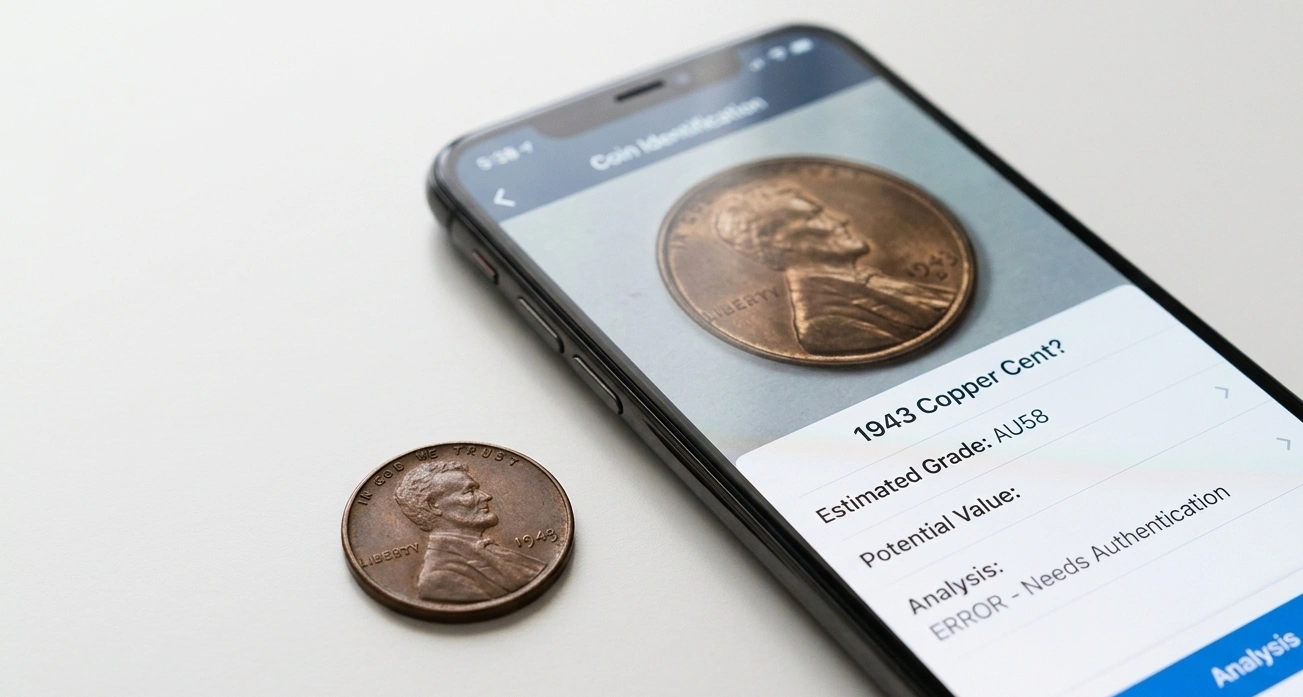
Consider the example of the 1943 1-Cent coin struck on a Copper blank instead of Steel.
Parameter | Value |
Metal | 95% Copper |
Weight | 3.11 grams |
Known Quantity | Approximately 40 specimens |
Price in 2010 | $1,700,000 |
Price in 2026 | $2,450,000+ |
Price dynamics for 1943 Copper cents:
1958: $40,000
1996: $82,500
2010: $1,700,000
2026: $2,450,000
Annual growth remains variable, reaching 15% during peak periods.
Besides primary scanners, collectors use auction aggregators.
The Mavin application helps determining real selling prices, excluding inflated asking prices.
Heritage Auctions provides access to archives with trade results spanning decades.
PCGS CoinFacts serves as the benchmark for condition assessment.
Synchronizing these services creates a comprehensive information environment.
Lacking digital verification reduces a lot's market attractiveness by 20-30%.
Buyers prefer lots having a confirmed history from databases.
Physical Parameter Analysis via Mobile Sensors
Modern smartphones equipped with advanced sensors expand application capabilities.
The magnetometer checks the magnetic properties of the alloy.
Calculating weight through volume and density provides approximate data.
Precision in measuring diameter through the camera reaches 0.1 mm.
Authentication Protocol via Application
Scanning obverse and reverse:
Comparing weight with table values
Analyzing the edge for seams
Checking the ring (for Silver and Gold coins)
Cross-referencing with known counterfeit databases
Price Dynamics of Bullion Investment Coins
The price of such coins remains strictly tied to the cost of the precious metal.
Applications track Gold and Silver quotes on the London exchange.
Gold Krugerrand (South Africa)
Gold Content: 31.1 grams
Total Weight: 33.93 grams
Purity: 917 (22 Karat)
Impurity: Copper (ensures wear resistance)
Premium to Metal Price: usually 3-5%
Price change over 7 years (in USD):
2019: $1,300 → 2022: $1,900 → 2024: $2,300 → 2026: $2,550+
Average annual value increase correlates with dollar inflation.
Applications allow instant calculation of melt value in any currency.
Ancient Coin Recognition Characteristics
Ancient coins have irregular shapes.
Identifying them represents a major challenge for artificial intelligence.
Coinoscope often provides a list of most probable variants.
Final decisions remain with experts or through expanded WildWinds database analysis.
Photogrammetry technologies allow creating 3D models of ancient coins.
This helps studying relief depth.
Ancient coin wear classification differs from modern standards.
Wear Category | Characteristics | Impact on Price |
VF (Very Fine) | Readable legend, noticeable wear | Base Price |
EF (Extremely Fine) | Minimal detail wear | +50-100% to Base |
Mint State | No traces of circulation | +300% and above |
Current Technology Issues and Limitations
Lighting affects the scan coins for value results critically.
Glares on Mirror (Proof) surfaces confuse algorithms.
Using a matte diffuser improves recognition quality by 40%.
Errors in defining coins often relate to the presence of multiple varieties of one year.
For example, the 1924 2-Kopek coin has variants with smooth and reeded edges.
Applications cannot always determine the edge type from a flat photo.
Requiring an additional edge photo becomes necessary.
Discrepancy between the edge and catalog description → Sign of a counterfeit.
Collector Usage Statistics
According to community surveys in 2026, software usage is distributed as follows.
Identification of unknown finds: 62%
Valuation of collection market value: 28%
Searching for rare varieties in bulk: 10%
Efficiency in finding rare specimens increases when using filters by country and period.
The USA, UK, and China remain leaders in the quantity of digitized data.
Numismatics in these regions is the most transparent.
Coins as a Protective Asset: 10-Year Data
Knight Frank Luxury Investment Index (KFLII) reports confirm numismatic market stability.
Coins often outperform Gold and real estate in the long term.
Growth Indices per Decade
Wine: +152%
Watches: +141%
Coins: +63%
Stamps: +48%
While showing moderate growth, coins are characterized by low volatility.
Applications help maintaining portfolio valuation accuracy without hiring paid appraisers.
This saves the owner from $50 to $200 per single consultation.
Metadata Role in Cataloging
Applications save GPS coordinates of the find location (for metal detecting).
This allows building distribution maps of coin types in antiquity.
Linking the date and time of the photo creates undeniable proof of ownership.
Exporting data into PDF or Excel formats simplifies preparing insurance documents.
Many insurance companies accept Coin ID Scanner reports as a preliminary inventory.
Specifics of Valuable Modern Specimens
Not only ancient coins possess high value.
Applications often record high prices for modern commemorative releases.
Example: 2 Euro "Grace Kelly" 2007 (Monaco)
Mintage: 20,001 specimens
Issue Price: $120
Price in 2014: $1,200
Price in 2026: $4,800+
Total Growth: 3900%
Coinoscope algorithms instantly highlight this profile among ordinary 2 Euro coins.
An average user might miss such a specimen in change.
Checking via an application takes a fraction of a second.