
1970-S Penny Value Guide: Proofs, Errors, and Rare Varieties
Many people look through their old glass jars and find shiny copper coins from the nineteen seventies because they want to know the real market price.
Because the United States Mint produced billions of these small coins every year, most standard examples remain very common today.
However, collectors focus on specific details and often pay much more money for rare versions or coins with unusual production mistakes.
Understanding the difference between a normal penny and a rare variety requiring a magnifying glass helps people identify the 1970 S penny value.
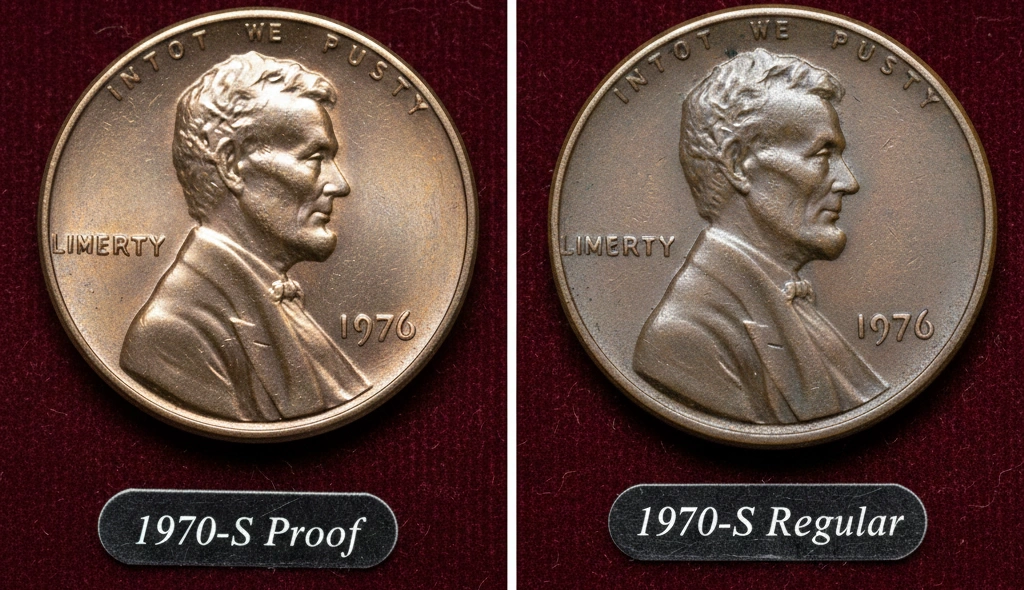
1970-S Small Date and Date Varieties
The year nineteen seventy is very important for coin collectors because the San Francisco Mint produced two different types of the Lincoln cent.
The first type is the Small Date variety and shows the number seven sitting higher than the numbers next to it.
The second type, known as the Large Date variety, features a seven sitting lower than the other numbers in the year.
Finding a Small Date 1970-S penny in perfect condition often results in a high price at a public auction.
Coin Variety | Estimated Grade | Current Market Value |
1970-S Small Date | MS65 (Red) | $50 - $100 |
1970-S Large Date | MS65 (Red) | $1 - $3 |
1970-S Small Date | PR69 (Deep Cameo) | $500 - $1,500 |
1970-S Large Date | PR69 (Deep Cameo) | $15 - $25 |
Investors buy these coins and usually look for the "Red" designation, meaning the copper still has its original bright orange color.
Coins lose their color and become brown or red-brown, so they typically sell for much less money compared to bright specimens.
Professional Proof Coins from the San Francisco Mint
During the nineteen seventies, the San Francisco Mint produced special coins called Proofs specifically for people collecting items.
These coins are struck twice with polished dies and have a very shiny mirror surface,e making them look like jewelry.
Collectors check their sets and often look for "Deep Cameo" inside the coin identifier app effects showing a heavy white frost on the portrait of Abraham Lincoln.
A 1970-S proof penny showing this strong contrast between the background and the portrait remains a very popular item for serious buyers.
Notable Mint Errors from the 1970s
Production mistakes happen at the mint and create unique coins, which often sell for hundreds or even thousands of dollars.
One common error involves a "Double, Die" which occurs when the machine hits the coin twice, twice creating a blurry or doubled image.
The 1970-S Doubled Die Obverse is a famous example and shows clear doubling on the words "Liberty" and "In God We Trust."
Finding a coin with these specific doubling marks often leads to a massive profit for the lucky owner.
Another error type called an "Off-Center Strike" happens when the metal disc does not sit correctly in the machine.
Coins miss part of their design and show a blank crescent shape on one side, attracting many specialized collectors.
The value of an off-center penny usually increases depending on the percentage of the design missing and the presence of the date.
Complete Value Guide for 1970s Pennies
Using this list, you can see how the location of the mint affects the price of your coins.
1970 Philadelphia Penny: Most of these coins are very common and have no mint mark, so they carry a value of only one cent in circulated condition.
1970-D Denver Penny: Millions of these coins with a small "D" under the date, exist in circulation today and usually stay at face value.
1971-S Proof Penny: These special coins are made for collectors and often sell for several dollars depending on their shininess and mirror quality.
1972 Doubled Die: This is perhaps the most famous penny of the decade and shows very clear doubling visible to the naked eye.
1974 Aluminum Penny: Being a very rare experimental coin not meant for the public, this item is illegal to own and remains extremely valuable.
Factors Influencing the Market Price
Several factors play a big role in the final price of a coin and determine if it is a common cent or a rare gem.
The condition of the coin is the most important factor and describes how much wear and tear the metal has suffered.
Coins have many scratches or dark spots and lose their value quickly because collectors prefer clean and bright surfaces.
The "Red" color designation mentioned earlier remains a key requirement for achieving the highest possible prices in the market.
Rarity also affects the price because coins have a low production number or a rare error, which attracts more competition among buyers.
The 1970-S Small Date is much harder to find than the Large Date variety, so it naturally commands a higher premium.
How to Identify Your 1970-S Pennies Correctly
To check your coins properly, you should find a bright light and a magnifying tool or a coin value checker app allowing you to see tiny details.
Looking at the number seven in the date, you must check if the top of the seven aligns with the top of the nine.
If the seven is high, you have a Small Date variety potentially worth a lot of money.
If the seven is low, you have a Large Date variety being a common coin for most people.
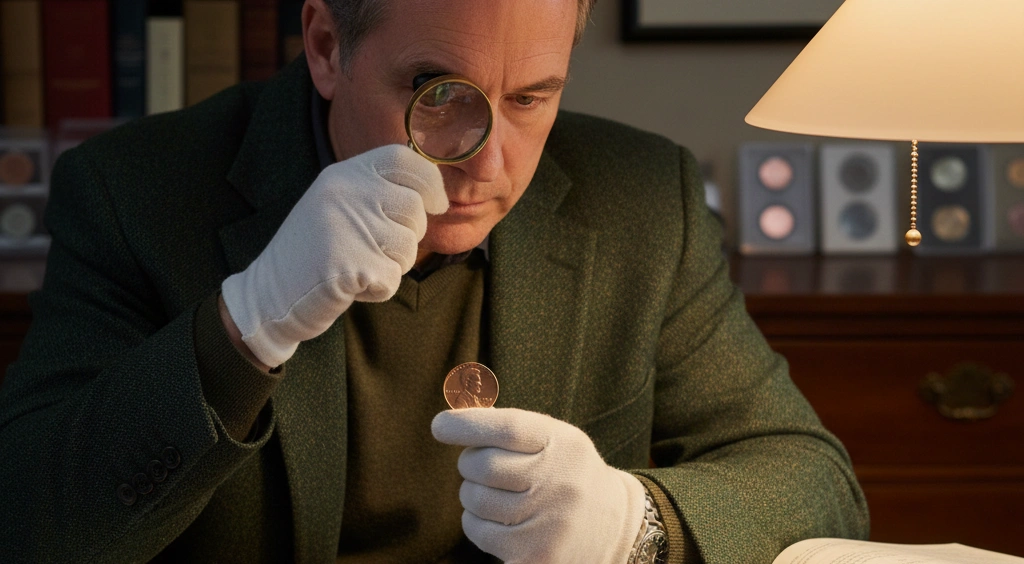
Checking the words "Liberty" and "In God We Trust" for doubling is also a very good practice for finding hidden value.
Comparing your coin to professional photos found online helps you understand the differences in design and minting.
Storage and Care for Your Coin Collection
Keeping your coins in a safe and dry place prevents the copper from turning brown or developing ugly green spots.
Collectors use plastic holders or special albums designed for coins and protect the surfaces from fingerprints and moisture in the air.
Never cleaning your coins using chemicals or soap is very important because cleaning destroys the original surface and ruins the value.
Collectors buy expensive coins and always look for original surfaces and naturally aged metal.
Why 1970s Pennies Remain Popular Today
Many people start their collection today and find the nineteen seventies a very interesting period because of the various mint marks and errors.
The transition from older production methods to modern technology created many unique variations for study.
Young collectors find a 1970-S penny in their change and often feel the excitement of discovering a piece of history.
As time passes, these copper coins become rarer in daily circulation and will likely increase in value for future generations.